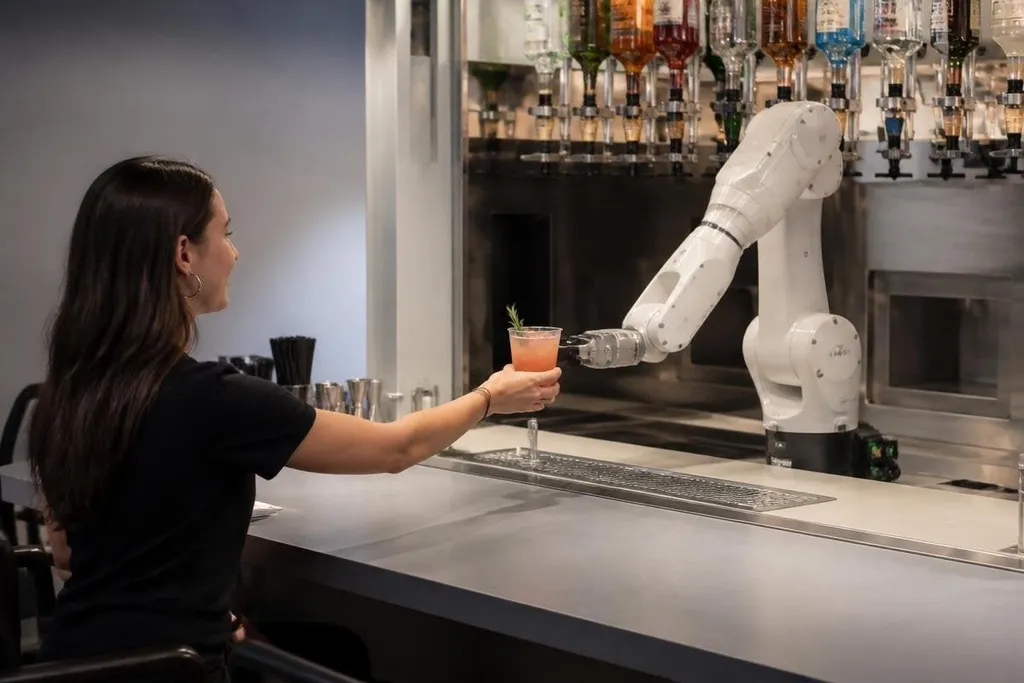
A robotic bartender can pour, mix, and hand over a drink without a person standing behind the counter. The hard part is proving that the machine saves enough time, space, or labor to justify its cost and upkeep.
- A drink recipe is software, but the ingredients still need checking.
- Speed depends on pumps, cleaning, cup handling, and payment.
- A buyer needs service data, not a polished demonstration.
What a robotic bartender actually does
Most robotic bartender systems divide the job into small steps. A customer chooses a recipe on a screen or through a connected ordering system.
The robot then selects a cup, moves liquid through pumps or valves, adds measured ingredients, and places the drink at a handoff point.
That layout matters because the robot may handle the pour while other parts of the station remain manual. Staff may still load bottles, refill ice, replace cups, clean nozzles, collect waste, and check age requirements for alcohol sales.
The arm is only one part of the system. Pumps, refrigeration, sensors, payment hardware, software, and the counter itself decide whether the station works during a busy service period.
Recipe control can help with repeat orders. A system can use fixed amounts for each drink, which gives the operator a record of what the software asked it to pour. That does not prove the final drink tastes the same every time, since ice size, temperature, syrup thickness, and an empty bottle can change the result.
Why venues are interested
A robotic bartender makes the most sense where the menu is fixed and demand arrives in bursts. Stadiums, hotels, cruise ships, airports, and event spaces may value a small service station that can take orders without needing a full bar layout.
The benefit depends on the task. If a machine pours a narrow set of drinks while staff handle food and customer questions, it may reduce work at one counter. If staff must supervise every order and refill the station every few minutes, the labor saving gets smaller.
This is why drink speed alone gives a poor answer. A buyer should measure the full cycle: order entry, payment, cup placement, pouring, handoff, cleaning, and refill. A 20-second pour still creates a slow service point if the customer waits 2 minutes for payment or a missing cup.
A paid bar also has to cover staff time, cleaning, and service calls. Robot24.com robotics coverage can help you compare those costs with the bartender’s tested service record when a demo moves into a real venue.
The parts that can fail
Liquid systems need cleaning. Sugar, fruit pulp, dairy, and alcohol can leave residue inside lines, valves, and nozzles. A machine that serves several recipes may need a clear cleaning plan for every ingredient path, not one wipe at the end of the night.
Ingredient changes create another problem. A menu may list one syrup while the machine contains another. A bottle sensor can show that a container is present, but it may not confirm that the bottle has the right liquid or that the pump is drawing it correctly.
Cup handling can also stop the station. A crooked cup, a blocked dispenser, or an ice bin that needs filling can interrupt the order. These faults are small, but they decide how often a person has to step in.
Alcohol adds safety and legal checks. The operator needs a way to verify age where required, prevent an incorrect handoff, and record who can change recipes or dispense drinks. Those controls need testing at the venue, not only in a factory demonstration.
I’d judge a robotic bartender by its service records, not by the smoothest video.
A buyer’s checklist
Before signing a purchase order, ask for these details in writing:
- Menu limit: How many recipes can run at once, and how long does a recipe change take?
- Full service time: What is the measured time from payment to handoff under normal demand?
- Cleaning work: Which lines, pumps, bins, and contact surfaces need cleaning, and how often?
- Refill plan: How many drinks can the station make before bottles, ice, cups, or waste bins need attention?
- Failure recovery: What can staff fix on site, and what needs a service visit?
- Operating cost: What does the price include, and which parts, software fees, or service charges come later?
The answers should come from the exact model and the intended venue. A system built for canned drinks may have a very different service burden from one that mixes fresh ingredients and crushed ice.
What happens next
The category will earn a place in hospitality when operators can publish full service numbers: orders per hour, cleaning time, refill frequency, faults, and cost per drink. Until then, robotic bartenders remain useful as a focused automation tool for fixed menus, but a person still owns the work around the pour.